


How to write a stakeholder engagement answer for UK tenders
How do you write a stakeholder engagement answer for UK tenders?
A strong answer explains who you need to engage, why they matter, how often you’ll involve them, and what you’ll do with what they tell you. In stakeholder engagement tenders, buyers want a practical plan, clear ownership, and proof that your approach will support delivery.
Keep it plain. Name the groups, set out the contact points, show how issues move, and back each claim with evidence. Below, you’ll see how to turn good intentions into a structured answer that’s easy to read, easy to mark, and hard to dismiss.
Why this matters in tender scoring
Stakeholder engagement is a risk question in disguise.
Buyers want to know whether people will support delivery, raise issues early, and stay informed when plans change. The Government Project Delivery guidance on stakeholder engagement makes that clear. Good engagement helps a project meet its aims because the right people stay involved at the right time.
That matters in procurement too. The Scottish Government’s procurement strategy on supplier engagement and contract management links engagement to stronger contract outcomes.
Most SME teams are writing bids around live delivery. So this section often gets done late, when patience is thin and the coffee is doing the heavy lifting. That’s why rejection notes often mention “limited detail” or “unclear approach”. The service may be sound, but the answer didn’t show it well enough.
A good stakeholder engagement answer shows a clear method the buyer can follow.
Start with the people
A weak answer opens with workshops, newsletters and review meetings. A strong one starts with the people who can affect delivery.
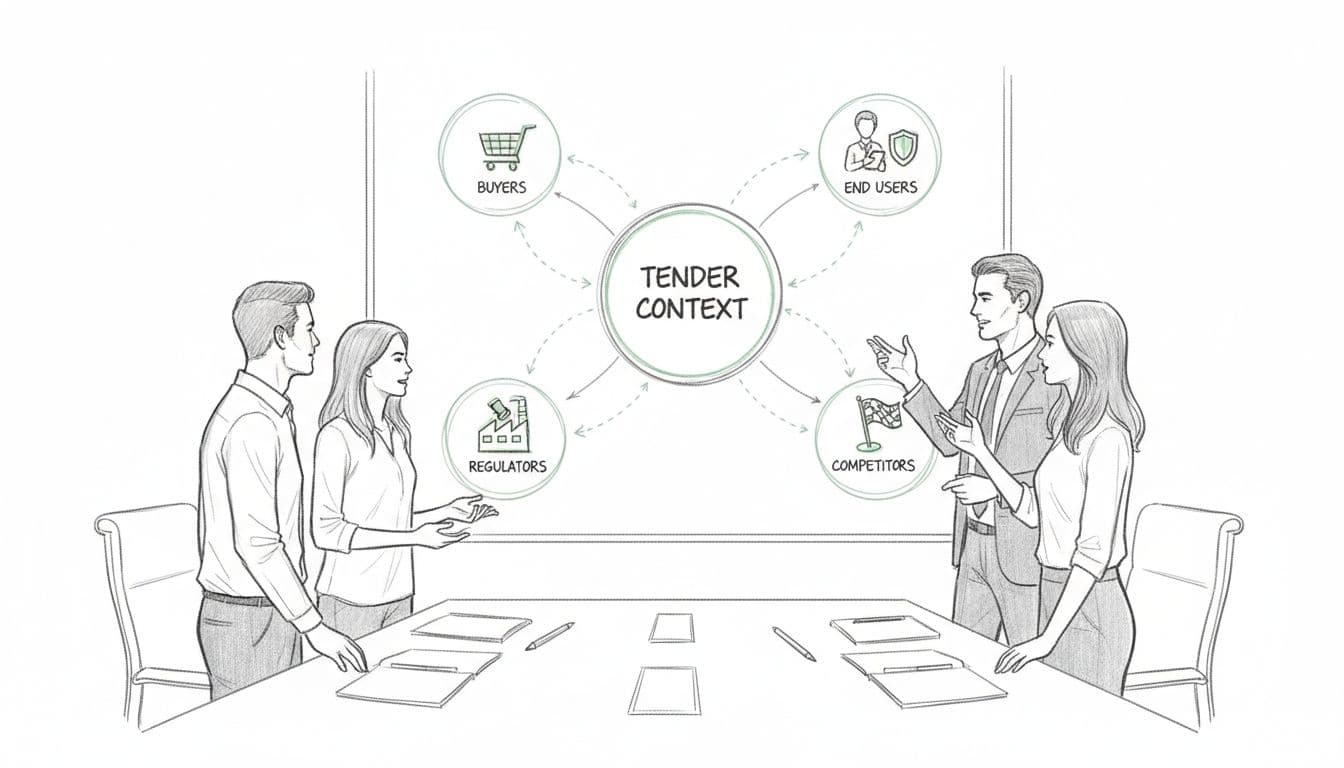
List your groups first. That might include the authority, service users, referrers, frontline staff, local partners, regulators, community groups, or landlords. Then ask three simple questions.
→ What does each group need from this contract?
→ What risk appears if communication fails?
→ Who in your team owns that relationship?
Think of it like a seating plan at a wedding. Leave the wrong person out and you’ll hear about it, loudly.
Turn your map into buyer language
Once you’ve mapped stakeholders, write them back in the buyer’s terms. If the tender says service users, don’t swap in customers. If it names ICS partners, local schools, or care coordinators, use those labels.
That makes your answer feel grounded in this contract, and it makes marking quicker. If you want a sense of why that matters, this guide on how to make your tender easy to mark is a useful sense check.
Build an answer that feels real
Now give your answer a shape the evaluator can follow. Start with the delivery outcome. Then name the stakeholder groups, explain the contact points and timing, show who leads the process, and finish with how feedback changes action.
The table below shows the shift buyers want to see.
| Buyer needs | Weak wording | Strong wording |
|---|---|---|
| Clear groups | “We engage all stakeholders.” | “The contract manager leads monthly reviews with the authority, while team leads gather user feedback weekly.” |
| A method | “We maintain open communication.” | “We use a set forum, named contacts, escalation routes, and response times.” |
| Proof | “We have strong engagement.” | “On a similar contract, attendance stayed above 90% and actions were closed within five working days.” |
In short, make it easy to picture your plan in motion. It shouldn’t read like minutes from a meeting no one wanted to attend.
Add evidence early
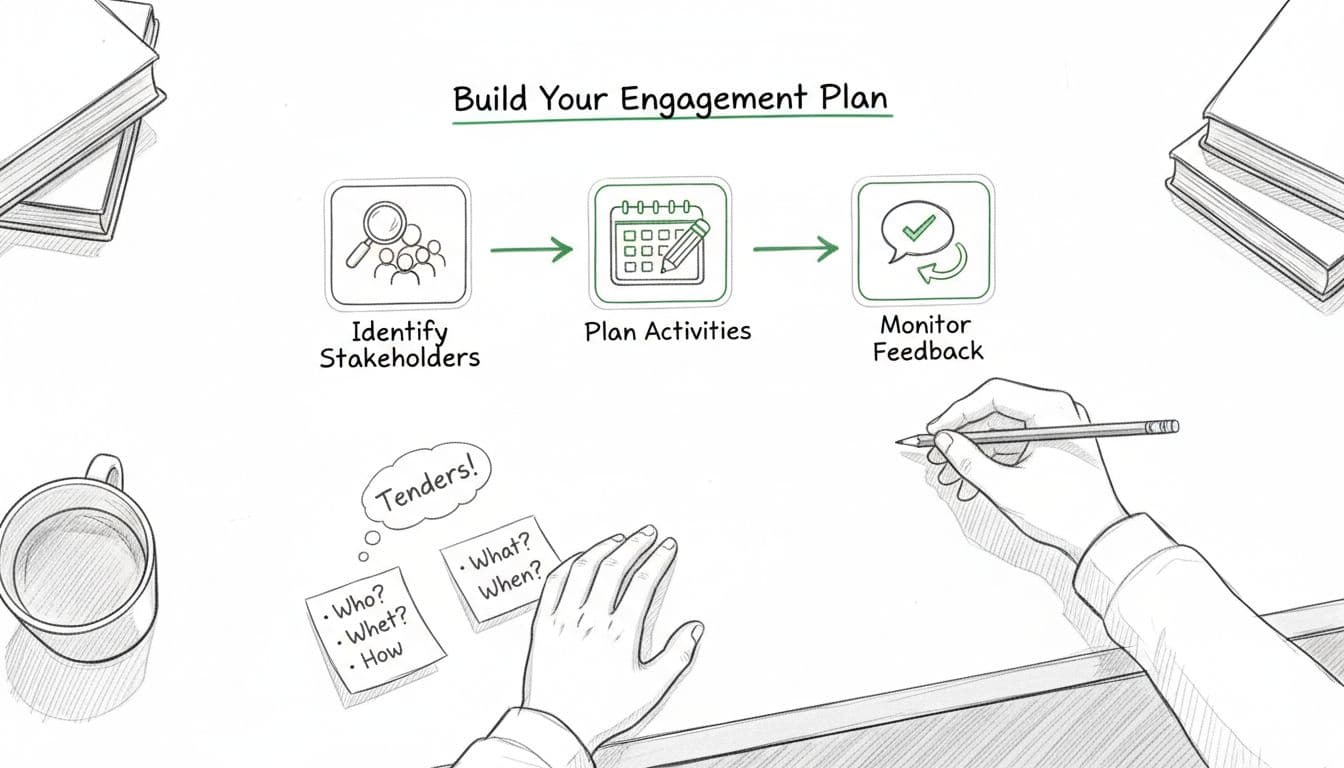
Don’t wait until the final line to prove the point. Add one short example, one metric, or one client result near the start. Public bodies increasingly expect planned, proportionate engagement, which is reflected in the Northern Ireland public procurement stakeholder engagement strategy.
If you’ve handled hard conversations well before, say how. Mention response times or attendance figures, or show how feedback led to a service change.
A quick checklist before you submit
Before you press send, pressure-test the answer.
→ Have you named the stakeholder groups clearly?
→ Does each group link to a clear purpose?
→ Are meetings, feedback routes, and timings stated?
→ Have you named the roles responsible?
→ Is escalation clear if an issue sits unresolved?
→ Have you shown how feedback changes action?
→ Are claims backed by an example, result, or measure?
→ Does the wording match the buyer’s language and question order?
If not, tighten it, because most lost marks here are fixable.
Common mistakes that lose marks
The usual slip is writing about activity when the buyer wants outcomes. A diary of meetings won’t give them confidence that engagement will support safer, smoother delivery.
Other common problems are easy to spot.
→ Generic claims like “robust engagement” with no proof
→ A long list of meetings with no purpose
→ No named owner for stakeholder relationships
→ No route for complaints, risk, or escalation
→ Copy-and-paste text that doesn’t fit the contract
→ Promises that sound lovely but can’t be measured
More of these common pitfalls in bid writing show up across quality answers generally.
Frequently asked questions
Make your plan easy to trust
A strong stakeholder engagement answer shows clarity, control and a plan that a buyer can trust.
The best answers usually come from teams close to delivery, then get sharpened by evaluator-style review. That keeps knowledge in-house and makes deadlines calmer over time, and it’s where Bidsmithery™ fits well. Take a look at our bid and tender review service or bid training, try our free Evaluator’s Eye Test, or book a fit check call.

Meet the author
Melissa Howard knows what evaluators look for, because she’s been one. She founded Bidsmithery™ after 15 years writing, managing and scoring bids across more than 10 sectors, and in the past three years her clients have won more than £103m in contracts.
The Bidsmithery™ secret sauce is simple: your team writes the bid, and Melissa reviews it before you submit, showing you where you’re losing marks and how to fix them. She also trains teams, so every bid gets easier.