

How to Write a Tender Response That Is Clear and Convincing
What Makes a Tender Response Clear and Convincing?
A capable team can lose marks before an evaluator reaches its strongest point. A tender response is clear and convincing when it answers each buyer’s question plainly, follows the instructions and proves the service can be delivered.
It doesn’t need grand claims or elaborate design. It needs a clear link from the requirement, to your method, to supporting evidence, to a result the buyer can score. You’ll see how to read the pack, organise the team and make every answer easier to assess.
Key Takeaways
- Read the full tender pack before drafting and create a compliance matrix covering every requirement, question, attachment, deadline and owner.
- Structure your response around the buyer’s evaluation criteria, matching headings to the question and giving higher-weighted elements more space and stronger evidence.
- Turn claims into evidence by showing what was delivered, who was responsible, how performance was measured and what results were achieved.
- Protect the final 24 hours for quality assurance, declarations, portal uploads and technical issues by managing ownership, reviews and evidence gathering early.
- Make the submission easy to score with clear formatting, direct answers, relevant proof and a final review against the buyer’s requirements.
Table of Contents
- Read the Tender Document Before You Write
- Why This Matters
- Build a Tender Response Around the Evaluation Criteria
- Set a Tender Timeline That Protects the Last 24 Hours
- Turn Claims Into Evidence Evaluators Can Score
- Format Your Submission for Fast Scoring
- Common Tender Response Mistakes to Avoid
- Make Your Next Response Easier to Award
Read the Tender Document Before You Write
Good submissions are won in the first read, not the final edit. Put the invitation to tender (ITT), contract specification, pricing schedule, form of tender, appendices and policies together before anyone starts drafting. Start bid writing with evidence gathering on day one.
Build a compliance matrix listing every question, sub-question, clarification question, attachment, word limit, social value requirement, owner and approval date. Mark pass or fail requirements separately. A one-page omission can remove you before a strong quality answer gets read.
The bid/no-bid call needs more than a quick nod from the sales team when assessing tender opportunities. For public sector contracts, can you meet public sector procurement rules, the selection criteria, capacity, delivery risk, price and references? A structured bid/no-bid framework tests your bid strategy, showing when tender support services are needed and preventing unpaid work.
If instructions conflict or a requirement is vague, submit clarification questions through the official route early. Record all clarification questions and official responses in the compliance matrix, then share changes with every contributor.
Why This Matters
Public sector contracts are assessed against published criteria. Evaluators can only award marks for information they can locate and verify. They cannot score a point they must assume, hunt for or piece together across three unrelated answers.
A clear tender response reduces interpretation. It shows what you will do, who will do it, how performance will be monitored and what proof supports the promise.
Evaluators can only score what they can find and verify. They cannot score what your team knows but has not shown.
An independent red team review for bids can be useful here. Your team keeps ownership of the bid, while someone outside the draft tests whether the answer is complete, believable and easy to mark.
Build a Tender Response Around the Evaluation Criteria
Take the buyer’s evaluation criteria apart without changing their meaning. Your bid strategy should follow its scoring structure, not the supplier’s preferred story. A quality question may cover delivery, risk, reporting and contract management. Give each part a clear home in the answer.
Put your headings in the same order as the question. If the buyer has stated weightings or sub-criteria, give higher-value elements more space and stronger evidence, especially on public sector contracts. If clarification questions change a question’s interpretation, reflect that in the answer plan. Selection criteria may confirm whether you can bid at all, while quality questions decide how well you score.
Use the following practical tool for bid planning:
| What the Criterion Tests | What Needs to Appear in Your Answer |
|---|---|
| Delivery method | A logical sequence, named responsibilities and realistic controls |
| Risk management | Key risks, prevention actions, triggers and accountable owners |
| Performance | Relevant KPIs, reporting frequency and action when results slip |
| Relevant experience | Comparable work, outcomes, evidence and lessons applied |
| Social value | A measurable community benefit, with delivery commitments and reporting |
| Added value | A practical benefit linked to the requirement, with a clear value proposition |
Any sentence that does not answer a scored element needs a reason to stay. Background can help, but it must not bury the point.
Give Introductions and Conclusions a Job
An introduction is not a company history. Use two or three sentences to state how your approach meets the requirement and what the evaluator will see in the answer.
The conclusion should then bring the method, controls and buyer outcome together. It’s a final reminder of why your approach is credible, not a reheated marketing paragraph.
Set a Tender Timeline That Protects the Last 24 Hours
Most bids become difficult when nobody owns the moving parts. Good bid management starts with a clear tender timeline. Work backwards from the submission deadline and protect the final 24 hours for portal uploads, checks, declarations, quality assurance and any buyer-side technical issues.
If you have 14 calendar days, don’t give the first ten to drafting. Build your bid strategy around early evidence gathering and clarification questions. Get requests out on day one, hold a first-answer review early, then leave time to improve what the reviewer finds.
Give each member of the bid team a defined job:
- The bid lead manages the bid writer’s work, compliance matrix, answer plan and version history.
- Operations provides delivery steps, risks, mobilisation detail, service controls and social value commitments.
- Finance checks pricing assumptions, calculations and financial attachments, including the pricing model.
- HR supplies policy evidence, training records and people-related commitments.
- A director approves the final position, commitments and commercial risk.
Keep contributors to agreed word counts and ask for source material, not rough sales language. A shared tender management workflow can help teams track ownership, deadlines and outstanding information. Tender support services are another option when internal capacity is limited.
Don’t wait for a perfect full draft before getting input. Review answer plans, evidence and key messages as they take shape. It is much easier to correct an unclear direction than rewrite 2,000 words on the final afternoon.
Turn Claims Into Evidence Evaluators Can Score
Evaluators cannot score adjectives. “Experienced”, “responsive” and “high quality” may sound positive, but they remain claims without supporting detail.
A clear tender response mirrors the buyer’s requirement, especially for public sector contracts. Include the date, scope, result and relevant KPI where you have one. If you use a percentage, explain the baseline, time period and how it was measured.
Past experience should not be a list of client logos. Explain what was delivered, what challenge was managed, what result was achieved and why that experience transfers to this contract. Respect confidentiality, but do not hide behind it when anonymised facts can still prove capability.
Evidence gathering works best when it is ongoing. Keep approved case studies, policies, certificates, CVs, performance data and client feedback in a controlled library. Future responses will be faster to build and harder to challenge.
Format Your Submission for Fast Scoring
Use the buyer’s response template first. Follow file names, page limits and upload rules exactly. A beautifully written answer in the wrong format is still a compliance risk.
Match headings to the tender question wording. Use short paragraphs, labelled tables and bullet points where they make information easier to locate. A table should clarify ownership, timing or performance. It shouldn’t be there because someone has discovered a new colour palette.
Keep fonts readable, leave enough white space and use graphics only where they add meaning. Tiny text, crowded process diagrams and decorative icons make evaluators work harder.
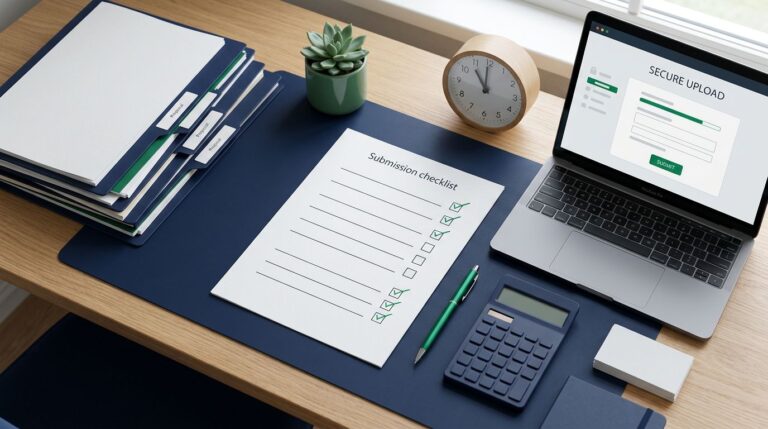
Before submission, use a bid review checklist for final quality assurance. Confirm it covers compliance, clarity, evidence and responses to clarification questions, including any resulting amendments. Check the answer against the question, not against what the author intended to say.
Common Tender Response Mistakes to Avoid
An unclear submission rarely loses because the team lacks knowledge. It loses because good knowledge is buried, unsupported or sent too late.
- Answering the general subject while missing a sub-question, selection criteria or mandatory instruction.
- Giving every question equal time, regardless of its weighting.
- Reusing generic boilerplate that could describe any supplier, a sign of a weak or unfocused bid strategy.
- Making claims without relevant evidence, measures or delivery detail.
- Failing to raise or record clarification questions before submission.
- Uploading minutes before the deadline with no time for a final check.
A strong bid review should challenge both the content and the route to submission. This complete check helps protect your win rate. A missing attachment can cost as much as a weak answer.
Make Your Next Response Easier to Award
Clear submissions are built before the writing starts. A strong tender response follows a bid strategy that maps requirements to proof, ownership and outcomes. That structure gives commitments such as social value credible evidence for public sector contracts.
Your team already knows the service. The job is to present its value proposition clearly, so buyers can score it with confidence. Bidsmithery™ offers tender support services, bid management, tender submission reviews, Bid Review retainer support and Bid Win Rate Accelerator Training for teams that want to improve their win rate without handing away control of their capability.
If a fresh evaluator’s view would help before your next deadline, explore a tender submission review. It can help turn a clear submission into a stronger basis for winning tenders.
Frequently Asked Questions
How Do We Analyse a Tender Document Properly?
Read every document in the pack, then create a compliance matrix. Capture each requirement, attachment, question, scoring weight, deadline and owner before drafting starts. Record uncertainties as clarification questions and log the buyer’s official responses alongside them.
What Evidence Makes a Tender Response Stronger?
Make evidence gathering a controlled process, using a central library of approved proof relevant to the buyer’s requirement. Good proof covers comparable delivery, measurable results, named controls, current policies and clear links between past performance and the proposed service.
How Early Should We Start a Tender Review?
Start reviewing answer plans and key evidence early. Keep the last 24 hours before the submission deadline for final checks, portal uploads and resolving technical issues.
Are Tender Support Services Worth It?
They are most useful when your team has the delivery knowledge but needs a clearer scoring structure, stronger evidence or an independent challenge before submission. The right support should improve the bid and build your team’s confidence for the next one.

Meet the Author
Melissa is the founder of Bidsmithery™ with over 15 years of experience across bid writing, bid management and evaluation. Having sat on both sides of the process as both writer and evaluator, she works across sectors because great bids follow the same principles wherever you’re tendering. With more than £103M in contracts secured, she specialises in framework bids and strategic bid reviews helping organisations sharpen their approach when it really counts.